

Last Updated: November 5, 2026
Quick Summary
To explain sober curious to friends, describe it as a flexible choice to question your drinking habits and cut back or stop without a fixed label or a promise to never drink again. Keep your explanation short, calm, and framed as curiosity rather than a verdict on anyone else's choices.
- Sobriety usually means full abstinence, while sober curiosity is a spectrum from taking a break to quitting altogether.
- Keep casual answers light with coworkers, and save your real reasons for close friends who will support you.
- Plan your drink, your line, and your exit before the event so awkward moments are already handled.
- Repeat the same short answer twice, and most people will stop asking about your drinking.
- Pick your level of disclosure before you arrive, and drop one level if you'd be uncomfortable being quoted.
Table of Contents
- What Sober Curious Actually Means (and What It Doesn't)
- What to Say When Not Drinking Alcohol: Scripts That Work
- How to Handle Peer Pressure to Drink Without a Fight
- Sober Curious Socializing: Planning Ahead for Real Events
- Non-Alcoholic Drinks for Social Occasions That Feel Like the Real Thing
- Deciding How Much to Share and With Whom
- Stock Your Cooler Before the Next Tee Time
- Frequently Asked Questions
What Sober Curious Actually Means (and What It Doesn't)
The American Psychological Association's 2025 overview describes the sober-curious movement as a low-pressure way to reconsider drinking and reduce the stigma around choosing not to drink. That flexibility is the point.
Here's what sober curious is not: it's not a judgment of your friends who still drink, and it's not a fixed identity you have to announce. It's a personal experiment.
Sober Curious vs. Sobriety: The Difference That Matters
Sobriety usually means full abstinence, often for good. The Partnership to End Addiction notes that people pursue different goals, from taking a break to drinking in moderation to quitting altogether.
That range matters when you explain it to friends. You're not claiming a permanent identity. You're exploring your relationship with alcohol.
One safety note before anything else: if you have physical dependence on alcohol, quitting suddenly can cause withdrawal (Alcohol Use: Managing alcohol withdrawal). Talk to a doctor first.
If you're weighing what you'll actually drink in social settings, our guide to the benefits of non-alcoholic beer covers what makes a good NA option.
What to Say When Not Drinking Alcohol: Scripts That Work
The best explanation is short, calm, and doesn't invite debate. Your tone does more work than your words. What most guides skip is that the right script depends on who is asking and where you are. Below are ready-to-use lines organized by relationship and setting, plus what to say when the first answer isn't enough. Once you’ve chosen a calm, concise response, setting healthy boundaries can help you keep the conversation on your terms.
Short Answers for Casual Acquaintances and Coworkers
Keep it light. You owe a coworker or a random foursome nothing more than a sentence.
- "I'm taking a break from drinking, but I'm still here for the laughs."
- "Just sticking to NA tonight. Feels good tomorrow."
- "Cutting back for a bit. Grabbing a non-alc instead."
- "I've got an early start tomorrow, so I'm pacing myself."
Then change the subject. "How's your round going?" works every time. If ordering out feels awkward, our guide on ordering non-alcoholic drinks walks through it step by step.
Longer Explanations for Close Friends
With people who know you, a little honesty goes far. Try:
- "I'm not quitting forever. I'm just paying attention to when and why I drink, and seeing how I feel."
- "I sleep better and think clearer when I skip it. So I'm testing that out for a while."
- "I realized I was drinking out of habit more than enjoyment, so I'm experimenting with what feels better."
Notice what these do: they frame it as curiosity, not a verdict on anyone else's choices.
What to Say on a Date or With New People
New relationships are where over-explaining backfires. Keep it brief and forward-looking:
- "I don't drink much these days. I'm happy with a soda and lime."
- "I'm more of a morning person, so I usually skip alcohol. Tell me about your week."
If the other person presses, one calm sentence is enough: "It's just not a big part of my life right now." Then ask them a question.
What to Say at Parties, Group Chats, and Family Gatherings
Group settings invite more commentary, so plan for the two most common follow-ups: "Why?" and "Are you pregnant / on medication / an alcoholic?" You do not have to answer any of those.
- For "Why?": "I'm just trying something different for a while. I'll let you know how it goes."
- For a health probe: "Nothing dramatic, just making a change I feel good about."
- For a teasing group chat: reply once with a light line ("Still fun, still here") and then stop engaging.
When the First Answer Isn't Enough
Sometimes one line doesn't land. Have a second line ready that closes the topic without friction:
- "That's really the whole story, I'm just not drinking tonight."
- "I appreciate you looking out for me, but I'm good."
Watch out: repeating a longer explanation twice can sound like you are asking for permission. If a second short answer doesn't end it, change the subject or step away rather than adding detail.
How to Handle Peer Pressure to Drink Without a Fight
Peer pressure rarely looks like a villain. It looks like a friend sliding a beer toward you and saying "come on, one won't hurt." The trick is to expect it and not take the bait.
A few moves that keep the peace:
- Repeat your line. Say the same short answer twice. Most people stop after that.
- Hold a drink. A non-alcoholic beer in your hand ends most offers before they start.
- Use humor. "I'm driving and I like my license." Laugh, then move on.
- Blame tomorrow. "Got an early tee time. I want to actually play well."
- Leave the loop. If someone keeps pushing, step away for a bit. You don't owe anyone a debate.
Don't lecture. The moment you sound like you're judging their drinking, the mood turns. Keep the focus on you.
Sober Curious Socializing: Planning Ahead for Real Events
Sober curious socializing gets much easier when you plan before you arrive. A little prep removes the awkward moments.
The Foursome – Non-Alcoholic Beer Variety Pack →
Before the event, decide three things:
- Your drink. Bring your own NA option or know what the bar stocks.
- Your line. Pick one script and have it ready.
- Your exit. Know when you'll head home if the night runs long.
For golf days specifically, our best non-alcoholic beer for golfers guide helps you match the right drink to the round and the 19th hole.
Watch out: showing up empty-handed to a party where you're the only one not drinking leaves you exposed to every offer. Bring something you actually want to drink.
Non-Alcoholic Drinks for Social Occasions That Feel Like the Real Thing
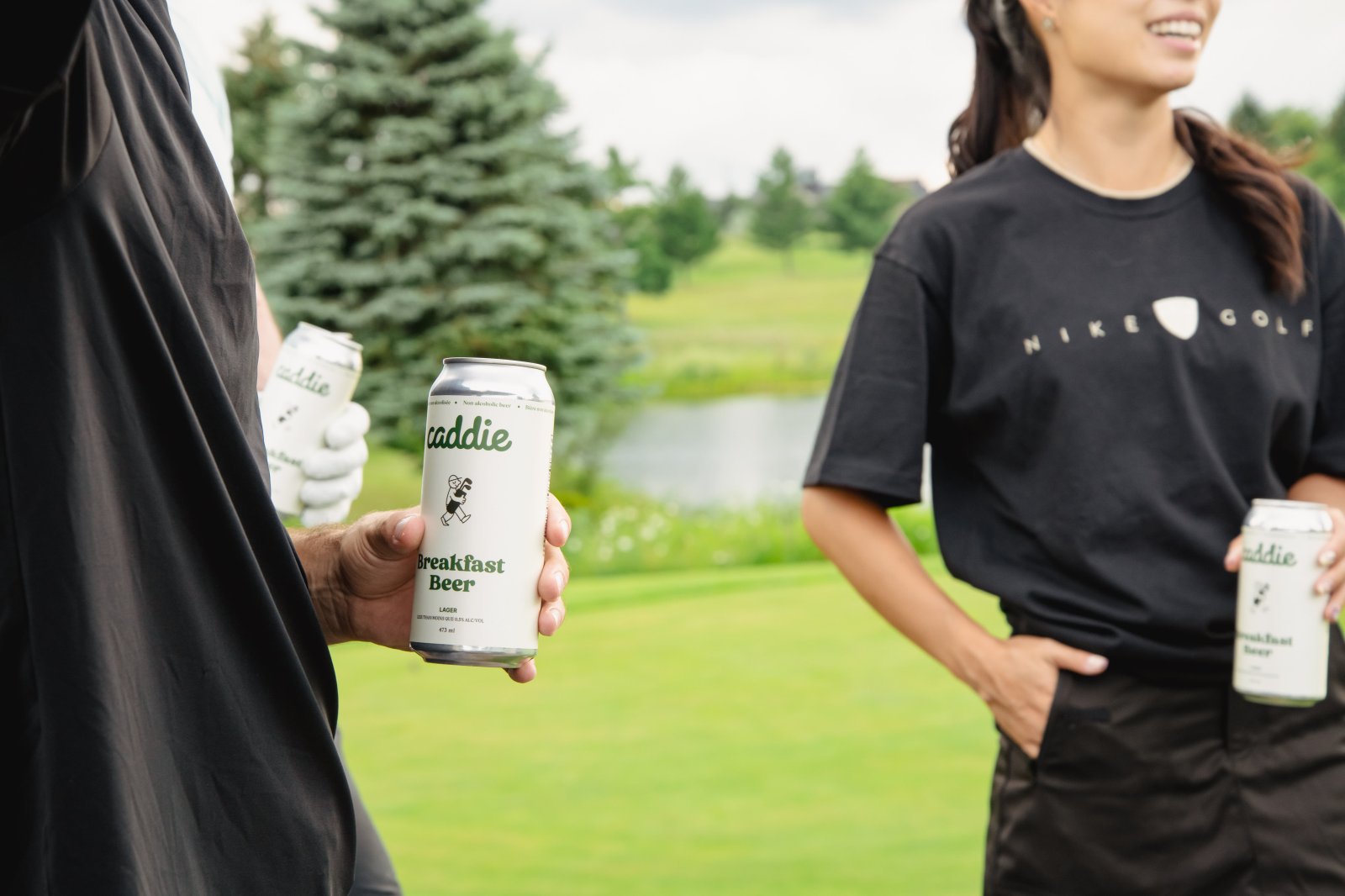
Many golfers worry they'll be stuck with water while everyone else enjoys a drink. Caddie's non-alcoholic beers are brewed to give you the taste of a cold beer without the alcohol.
Caddie's beers are made for exactly this moment. Our Foursome variety pack gives you both of our beers in one box: Breakfast Beer NA Lager, crisp and easy-drinking for early tee times, and Early Bird NA Session IPA, juicy with notes of gooseberry, white grape and honey.

That means you can hold a real-looking drink, enjoy the taste, and still drive home sharp. For a closer look at what NA beer offers, our benefits of non-alcoholic beer guide goes deeper.
Deciding How Much to Share and With Whom
You don't owe everyone the full story. Decide your level of disclosure based on the relationship, not the situation. The useful question is not "How honest should I be?" but "What does this person need to know to be a good friend to me tonight?" That reframing lets you share less with acquaintances and more with the people who will actually support you.
A simple way to think about it:
Relationship |
What to share |
Example line |
Why it works |
|---|---|---|---|
Coworkers, acquaintances |
"Taking a break" |
"I'm off it for a bit." |
Low detail, no debate |
Casual friends |
"Cutting back for a bit" |
"Trying a drier month." |
Friendly, still private |
Close friends |
Your real reasons |
"I want to see how I feel without it." |
They'll support you |
Family |
As much as feels safe |
"I'm making a change I feel good about." |
Set boundaries as needed |
Dates, new people |
One forward-looking line |
"I don't drink much these days." |
Keeps the focus on getting to know each other |
Three Levels of Disclosure
Think in levels rather than a single decision:
- Level one, the headline. One sentence that states the choice without the reason. Use this with acquaintances, coworkers, and anyone who has not earned the backstory. "I'm not drinking tonight" is complete.
- Level two, the reason in brief. One sentence on why, kept general. Use this with casual friends and dates. "I sleep better and think clearer, so I'm testing it out."
- Level three, the full picture. Your real reasons, including health, family history, or personal history, shared only with people you trust to hold it well.
You can move between levels over time. Starting at level one and upgrading later is easier than over-sharing and wishing you hadn't.
Deciding Before You Arrive
Pick your level before the event, not in the moment. A useful test: imagine the person repeating what you said to someone else. If that thought is uncomfortable, drop one level. This is not about secrecy, it is about choosing what is yours to share.
When Someone Asks Something Too Personal
Intrusive questions are common, especially at family gatherings. You can decline without conflict:
- "That's a longer story than a party deserves. I'm happy to just enjoy tonight."
- "I'd rather not get into it, but I appreciate you asking."
- "I'm good, how are you doing?"
Watch out: answering a personal question once often invites a follow-up. If you don't want to discuss it, redirect with a question about them rather than offering a partial answer that invites more.
There's no rule that you have to explain yourself at all. "I'm good with this" is a complete answer. If a friend asks deeper questions about the product, our FAQ page answers the common ones so you feel ready to explain your choice.
Stock Your Cooler Before the Next Tee Time
The easiest way to stay sober curious on the course is to never show up empty-handed. Keep a cooler stocked so the choice is already made before anyone offers you a drink.
Caddie is brewed in Ontario for golfers who want the tradition and camaraderie of the game without the fog.
Get started with Caddie and keep your edge from the first tee to the final green.
Frequently Asked Questions
What does sober curious mean?
Being sober curious means you're questioning your relationship with alcohol rather than committing to full abstinence. You might take a break, cut back, or simply pay more attention to when and why you drink. The American Psychological Association describes it as a low-pressure way to reconsider drinking without stigma. It's a flexible mindset, not a fixed identity, and you can be sober curious while still going out with friends and enjoying social situations on your own terms.
How do I tell my friends I'm not drinking without sounding judgmental?
Keep the focus on you, not them. Try something like: 'I'm taking a break from drinking to see how I feel' or 'I'm trying something new with my drinking habits.' Avoid framing it as a health lecture or implying their drinking is a problem. If someone pushes back, a light 'It's just a personal experiment' usually ends the conversation. You can still be sober curious socializing with the same group, and ordering a non-alcoholic drink keeps the ritual intact without the commentary.
How do I handle friends who pressure me to drink?
Have a short, repeatable line ready: 'I'm good with this one, thanks.' Say it calmly and don't over-explain, because long justifications invite debate. If the pressure continues, redirect: 'I'm driving' or 'I've got an early round tomorrow.' Knowing how to handle peer pressure to drink is easier when you've planned your response in advance. Most friends drop it after one or two declines. If someone keeps pushing, it's fair to say plainly: 'I'd appreciate it if you'd let this go.'
What are some non-alcoholic drinks to order with friends?
You've got more options than ever. Non-alcoholic beers like a crisp lager or a session IPA give you the familiar taste and ritual of a post-round drink. You can also ask for soda with lime or sparkling water in a glass. Bringing your own non-alcoholic drinks for social occasions, like a variety pack in the cooler, means you're never stuck with just water while everyone else has a beer.
